


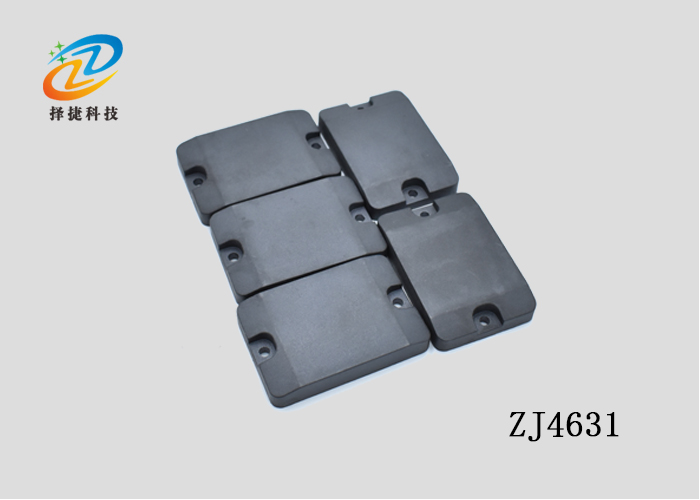
on-metal tagJ4631
Model: ZJ4631-2
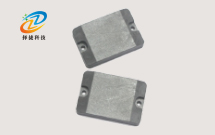
In a variety of demanding industrial environments, strong acid-resistant alkalis are indispensable for high temperature resistant metal labels. It can work in very high acid alkyl conditions such as chemical production workshops, without fear of heat at the edge of high temperature melting furnaces or metal interference. With its superior properties, strong acid-resistant alkalis are well marked to keep the production process in order.
Product Overview
◆ Strong acid strong alkalis are high temperature resistant Zon-metal tag ZJ4631 designed and constructed for use in bad conditions, and are fitted to metal material surfaces that are long-term at 200 degrees high temperature, long-term acid and alkaline environments, and can withstand ultrasound cleaning. Strong acid strong alkalis are flexible enough to resist heat Zon-metal tagZJ4631, which can be installed with a bolt or screw. This label is reliable: high temperature test, high temperature exchange test, acid alkali test, vibration test, ultrasound wave washing test. The high temperature tolerance Zon-metal tag ZJ4631 plant was tested for performance consistency before it was released, including the European label conformity integrated test, and the EPC and User regions wrote tests to confirm that the labels were very reliable and consistent. They applied to the vehicle production stream, the production line for high temperature metal tray management, the storage shelf management, asset management, treatment and packaging management, the management of high school assets, and the management of special vehicles.
Specifications
Airline protocols: MEPC Class1 Gen2; ISO18000-6C
• Working frequency: 902-928 MHz (American, compatible national), 865-868 MHz (European standard) (and may be customised for other specified frequencies)
Chip type: Alien H3 chip (optional Impinj M4QT chip, or NXP Ucode 7M chip)
Chip storage: H3 chip: EPC 96bits (extensible to 480bits), user area 512bits
◆ TID: TID number is global and cannot be modified
Read-and-write performance: read- and write-able (clients can repeat their content in chips)
Data preservation: 10 years
Quality assurance: 1 year
Materials for the application of a Zippo: to metal material surface
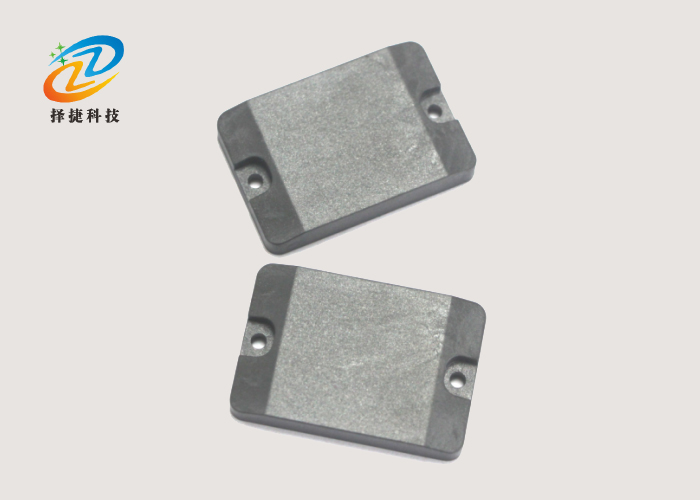
Packed materials: grey and black engineering plastics
Weight of aluminum product: 21 g/s
Form of the product: Single
RoHS: Rosh.
Colour of the Zippo: Grey black (other colours can be customised)
Working temperature: -25° ~95°
Long-term storage temperature: -45° ~200°
Triple temperature: 230° 1 hour
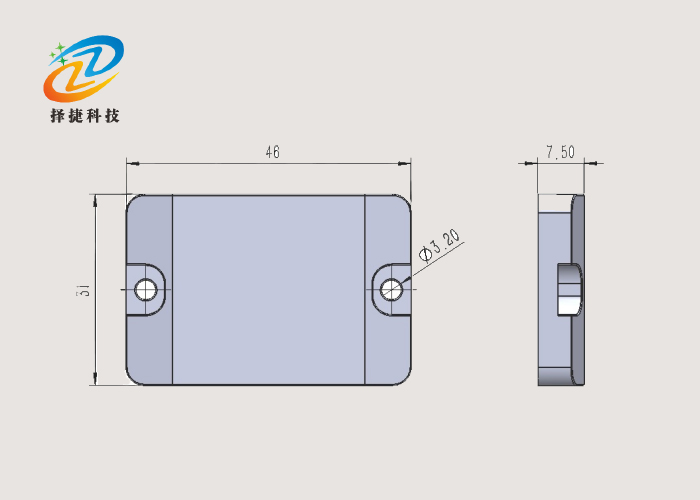
Total size (long* width* thickness): 46 mm * 31 mm * 7.5 mm
Arcular diameter: 3.2 mm
Distance between the centre of the pore: 39.6 mm
Additional Specifications
| Tag Dimensions | 46*31*7.5mm |
|---|---|
| Air protocol | EPC Class1 Gen2 |
| Chip Type | Alien H3 |
| Operating Frequency | 902-928MHz |
| Data saving | 10 years |
| Quality assurance | 1 year |
| Applications | Automobiles produce water lines, production lines are hot metal trays... |
Radio frequency performance
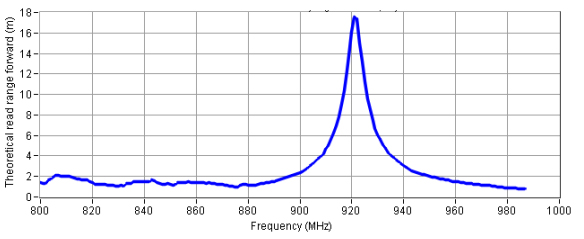
Fixed reader (on metal): 6 m or more (4W EIRP, using Alien 9900 fixed reader, with a possible difference in reading distance if other readers)
Handheld readers (on metal): 2.5 m or more (reading distance in open space using Alien 9001 handheld, which may vary if other handhelds are used)
Catalogues: Linear polarization
Quantum function and consistency testing: full test and consistency testing through Voyantic Finland
The following are the electrical performance tests at each frequency point (tests using the Tagformac label test system of 1O% in Voyantic, Finland):
Handheld readers (on metal): 2.5 m or more (reading distance in open space using Alien 9001 handheld, which may vary if other handhelds are used)
Catalogues: Linear polarization
Quantum function and consistency testing: full test and consistency testing through Voyantic Finland
The following are the electrical performance tests at each frequency point (tests using the Tagformac label test system of 1O% in Voyantic, Finland):
Reliability test
High temperature test: 200 degrees high temperature passing 180 days continuous test
Liquor testing: 95% of alcohol concentration tested passed
Gasoline test: Gas 92 cleared.
High-temperature exchange test: -40° + 150°7 high-temperature condensation cycles, 2 days in a row
◆ RoHS: compliant; materials certified by SGS
IP level: IP68
Ultrasound cleanup test: Passed
Liquor testing: 95% of alcohol concentration tested passed
Gasoline test: Gas 92 cleared.
High-temperature exchange test: -40° + 150°7 high-temperature condensation cycles, 2 days in a row
◆ RoHS: compliant; materials certified by SGS
IP level: IP68
Ultrasound cleanup test: Passed
Options
Pre-written: Support
Laser surface typing: Support
Laser surfaces code: support
Spectrum: supports single or multi-coloured silk marks
Double-side glue on the back: optional but not supportive of effective binding at high temperatures above 100 degrees
Skin-up product colour custom: support (over 5,000)
Laser surface typing: Support
Laser surfaces code: support
Spectrum: supports single or multi-coloured silk marks
Double-side glue on the back: optional but not supportive of effective binding at high temperatures above 100 degrees
Skin-up product colour custom: support (over 5,000)
Installation
Nail installation
Zirconium application purpose: high level of reliability after installation, difficult to remove, and anti-vibration
• Fits to the occasion: generally used in situations where labels are permanently used and do not replace label installed locations
◆ Nail size: Label perforation diameter of 3.2 mm, with a contour diameter of 3.0 mm or 2.4 mm for the nails used, and a condulsion length selected according to actual demand (please note also that the strangulation strength of different materials is different, its strength requirements are different, and the strutting is tested before use).
Delivery mode: Nail is not a standard and requires the user to procure it itself
Screw Install
Purpose of Zen applications: high level of robustness and vibration resistance after installation
• Suitability: occasions where labels are commonly used for long periods of time but may need to be replaced
Snail specification: Label perforate is 3.2 mm in diameter, using a screw specification of M3.0 or M2.5 and the length of the bolt is selected according to actual needs
Delivery mode: screws and bolts are not standard, requiring the user to procure itself
Remarks: In situations where vibration-proofing is required, a screw needs to be reinforced with strong and hot glue or other hard-on screws that can withstand high temperature in order to prevent the nut from flashing.
Placement of Tabs
The correct placement of the label may in some cases affect its reading and writing performance.
1) When placed and installed, the following points need to be noted:
• The label needs to be installed on the metal surface and, if it is placed on a non-metal surface, its reading and writing performance will be significantly reduced, even to such an extent that it has a significant impact on its reading and writing;
(b) No metal shield between the Zilong tag and the straight distance of the ZZZZan antenna;
• The larger the metallic surface at the bottom of the label, the better;
2) The polarization of labels:
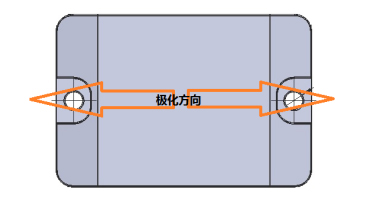
Three points need to be noted for the polarization of labels:
• When the antenna of the reader is a standard round polarized antenna, when labels are installed, it may be possible to de-compatibility of the label with the reading device antenna;
• When the antenna of the reader used is a linear polarized antenna, the polarization direction of the label must be in line with that of the reading and writing antenna, otherwise it will not be able to read or write very well;
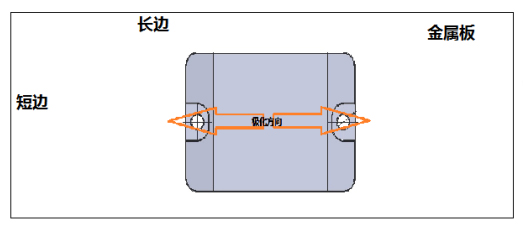
When the metal surface is installed for a comparative hour, the polarization of the labels corresponds to the long side of the surface and is as far as possible at the centre of the surface of the metal, as recommended in the figure below.
1) When placed and installed, the following points need to be noted:
• The label needs to be installed on the metal surface and, if it is placed on a non-metal surface, its reading and writing performance will be significantly reduced, even to such an extent that it has a significant impact on its reading and writing;
(b) No metal shield between the Zilong tag and the straight distance of the ZZZZan antenna;
• The larger the metallic surface at the bottom of the label, the better;
2) The polarization of labels:
Three points need to be noted for the polarization of labels:
• When the antenna of the reader is a standard round polarized antenna, when labels are installed, it may be possible to de-compatibility of the label with the reading device antenna;
• When the antenna of the reader used is a linear polarized antenna, the polarization direction of the label must be in line with that of the reading and writing antenna, otherwise it will not be able to read or write very well;
When the metal surface is installed for a comparative hour, the polarization of the labels corresponds to the long side of the surface and is as far as possible at the centre of the surface of the metal, as recommended in the figure below.
Product Photos
 Ms. Lei
 Mr. Pang