


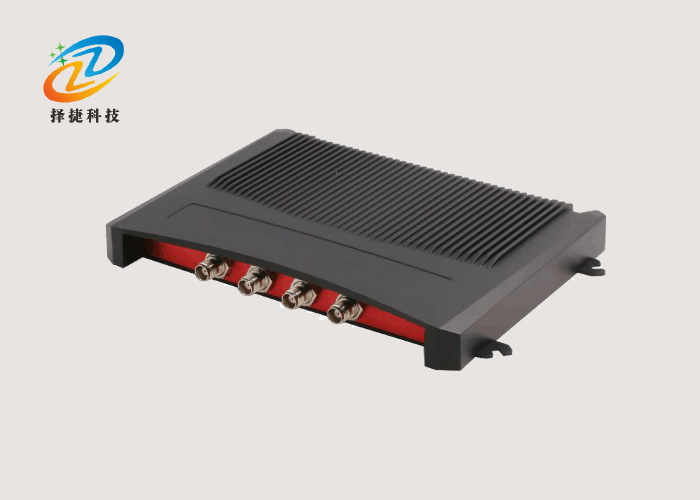
Long-range UHF electronic labeler ZJ-F503-4A/IP
Model: ZJ-F503-4A
In the large warehouse logistics park, a forklift is full of cargo. The forklift driver, while operating, relies on a long-range UHF electronic label machine. When forklifts are taken, it can identify the goods at a distance and quickly confirm information about them; in the course of removal, it is used again to check their location at any time; when they reach a designated area, Wang will also review the goods with a remote UHF electronic tag extension to ensure that the goods are moved accurately.
Product characteristics and advantages
• Autonomous intellectual property design;
• Work frequency 840-960 MHz (which can be adjusted to the requirements of different countries or regions);
◆ (a) Designed on the Impinj R2000 reading and writing engine, which fully supports electronic labels that meet the EPC CLASS1 G2, ISO18000-6B standards;
• Working on a wide-spectrum jump frequency (FHSS) or an ad hoc frequency launch to support RSSI functions, with peak label patrols exceeding 700 per second;
• Output power up to 33dBm (modifiable);
◆ Supports four external TNC antenna ports, with automatic antenna fine-tuning and antenna detection.
• Support for response and real-time survey work models;
• Label cache capacity: 1000 @up to 96bitsEPC;
• Support for the two conflict-prevention models of EP and TID;
• Low-utility design, single + 9V power supply, with the option of a PEE power supply;
• Support for multiple communication interfaces such as RS232 and USB (Slave) with RJ45 (TCP/IP);
• Provides a dynamic connection library (DLL) and demonstration software source code to support secondary development;
• Precision and small design to meet the needs of a wide range of applications;
• A variety of wireless frequency recognition (RFID) systems, such as logistics, door-to-door systems, anti-false systems and production process control.
Power characteristics
Limit parameters
• Power voltage (VCC): 16V
· Working temperature (TOPR): 20 ~ 55 °C
• Storage temperature (TSTR): 20~85°C
Specifications (except for special instructions, the specified specifications are taken from TA = 25°C and VCC = + 9V working conditions)
• Power voltage (VCC): 8-12V (typically 9V)
• Work current (IC): 0.5-1.2A
• Frequency of work (FREQ): 840-960 MHz (typically 860-868 MHz, typical 902-928 MHz)
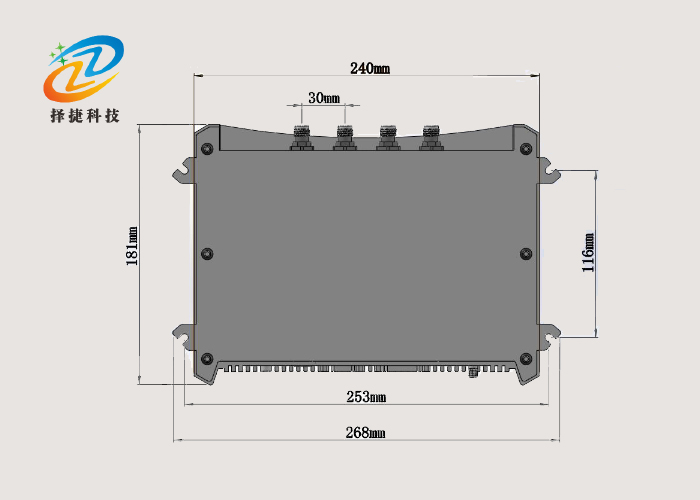
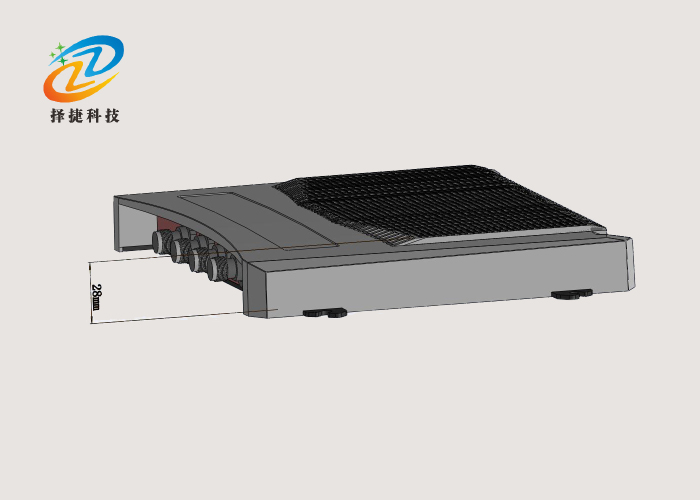
◆ Dimensions (L x W x H): 268 x 181 x 28 mm
Technical Parameter Supplement
• Working frequency: 840-960 MHz
• Power voltage: 16V
• Output power: 33dBm (modifiable)
• Working temperature: 20~55°C
• Storage temperature: 20~85°C
• Work: low-capacity design, single + 9V power supply, optional PEE power supply
• Work currents: 0.5-1.2A
• Interface: multiple communication interfaces supporting RS232, USB (Slave), optional RJ45 (TCP/IP)
• Specification size: 268*181*28mm
• Weight: 1180G
• Support for 4 external TNC antenna interfaces and automatic fine-tuning of antennas and antenna detection
• There may be differences in the parameters and functions of this card reader in different national or regional standards and circumstances, without further notice
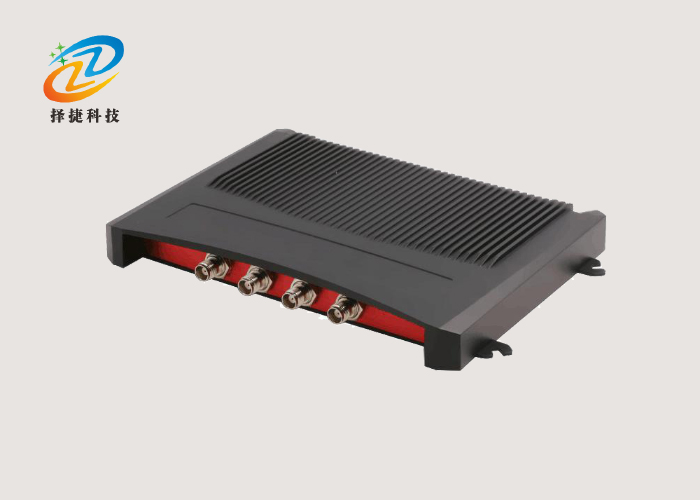
Product Photos
Specifications
| Power voltage | 16V |
|---|---|
| Operating Frequency | 840-960MHz |
| Operating Temperature | -20~+55℃ |
| Storage temperature | -20~+85℃ |
| Read/Write Range | 2-4m |
| Specifications | 268*181*28mm |
| Applications | Logistics, door-ban systems, anti-false systems and production processes... |
 Ms. Lei
 Mr. Pang