


RFID Software Systems


Zejie Smart Hotline
400-868-5581

Actual operational address
3F, Building 1, 875 Qiuxing Road, Lin-gang Special Area, China (Shanghai) Pilot Free Trade Zone
RFID Smart Pallet Management System: Web Brochure Overview

Use RFID to streamline pallet movement and build a smart warehouse with real-time visibility,
end-to-end oversight, and direct control.

RFID Tags Designed for Pallets
Impact-resistant, long-range tags link an entire pallet load to one identifier.
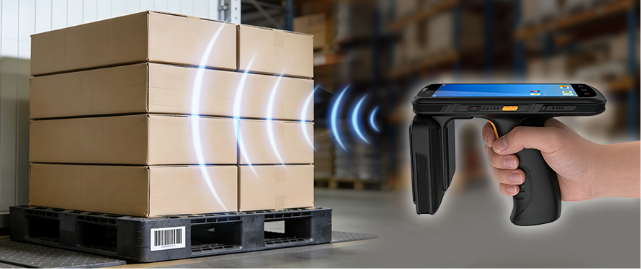
Designed for pallet handling, each tag identifies one pallet or its entire load. Pallets are recognized on detection and can be read in batches.
Core strengths

An on-metal, impact-resistant, acid- and alkali-resistant enclosure is designed for harsh conditions such as forklift impacts, outdoor storage, and cold-chain transport. Service life is up to 5–8 years.
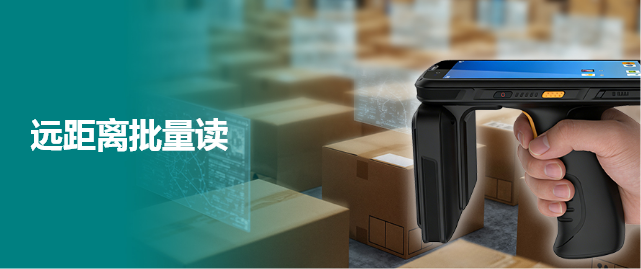
UHF RFID offers a single-tag read range of up to 3–8 meters. The device reads dozens of pallet tags at once, with throughput more than 100 times that of barcode scanning.
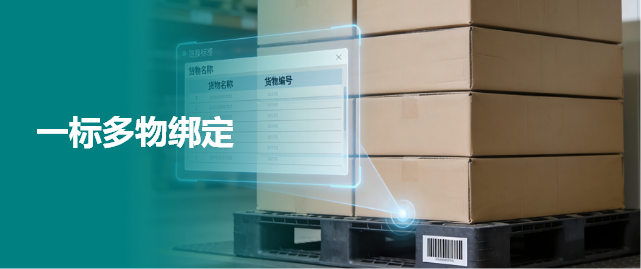
The software links one tag to N items. Scanning the pallet tag automatically returns the total item count without scanning each item.
What This Means for Your Operations
RFID Tag Initialization
Three Flexible Ways to Link Tags, with Zero Data Errors
Multiple encoding and linking options support different hardware setups and workflows, allowing a pallet ID to be linked quickly to the details of its load…
Core strengths
Mode 1:Link at Print Time
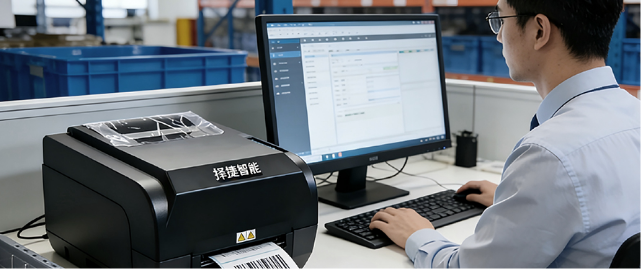
The system, when entering the tray and cargo information, directly drives RFID printers to write and print labels, and operators paste and bind. This applies to standardized repository scenes, efficiency...
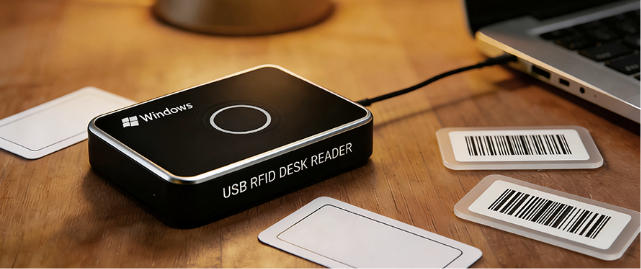
Mode 2:Pre-Encode with a Desktop RFID Writer
Enter the information in the system, then use a desktop RFID writer to encode blank tags individually or in batches. Once the records are linked to the tags, attach the tags to the pallets by hand. This workflow suits advance tag preparation and offline staging.
Mode 3:Link On Site with a Handheld Reader
Attach a blank tag to the pallet, then scan it on site with a handheld RFID reader. Enter or retrieve the details and save them to link the tag to the record in real time. This suits nonstandard cargo, ad hoc data entry, and mobile workflows.
What This Means for Your Operations
RFID Scanning Equipment
Flexible placement and multi-angle coverage allow full pallets to pass without a manual scan.
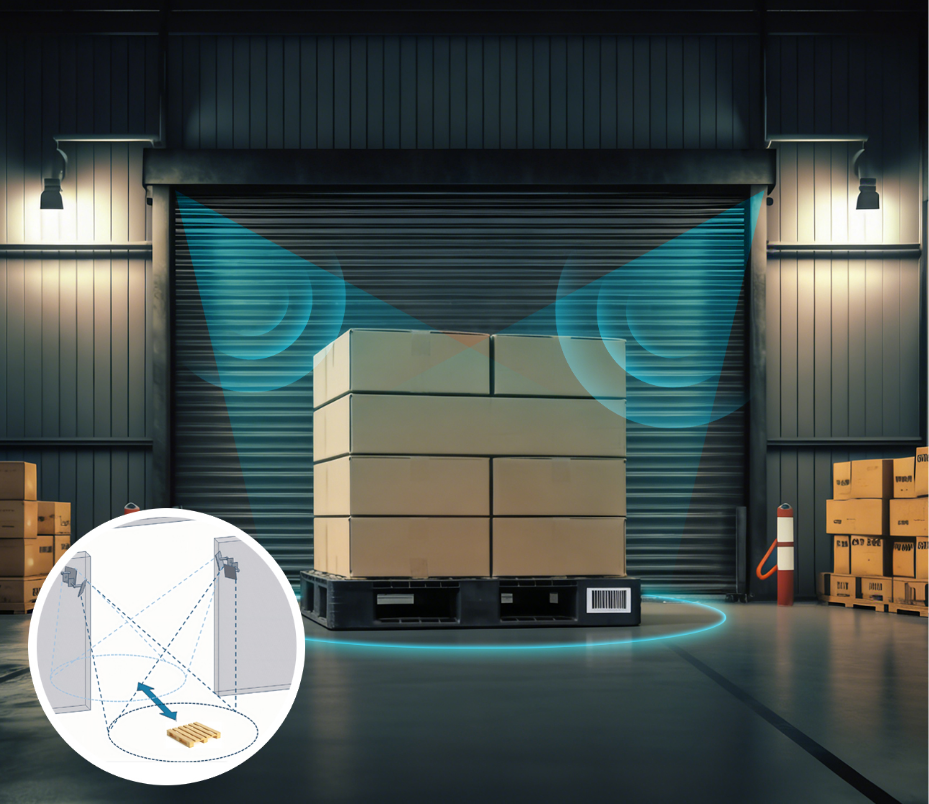
Unlike fixed portals, RFID scanning equipment on adjustable mounts can be positioned to suit each inbound or outbound checkpoint, verifying entire pallet loads automatically within seconds.
Core strengths
Flexible deployment, tailored to local conditions
A conventional portal must be installed on either side of a fixed doorframe. This system uses adjustable mounts that can be fitted inside or outside the doorway or on either side of the passage, including at wide lanes, irregular openings, and passages without a doorframe.
Multi-angle scan. Blind zone clean.
Supports the free-flowing of antenna angles and direction. Forklifts can be reoriented to scan beams for entry and exit and forklift heights, ensuring that the tray is ... captured, ... read out of blind areas, regardless of the angle from which it passes.
Business logic is the same. It's not a sense of control.
Although installed in a flexible form, the performance of operations is consistent with the fixed portals. The system may read labels in milliseconds when the forklift carrying tray passes, automatically completes access to the library, and prevents errors
What This Means for Your Operations
Handheld terminal batch operation
Scan the entire disk in an open space, double-modeled offline.
Flexibility to complex scenarios, whether high-positioned shelves or network blind areas, can be easily addressed.
Core strengths
 Insisting batch reading
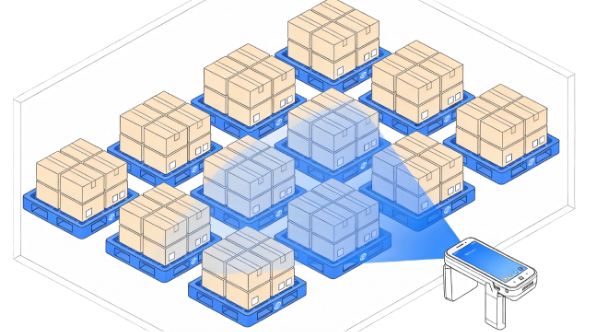
Without needing to aim at each tag, the handheld reader can scan a row, level, or entire pallet area from 3–5 meters away, reading hundreds of tags in one second.
 Offline mode of operation
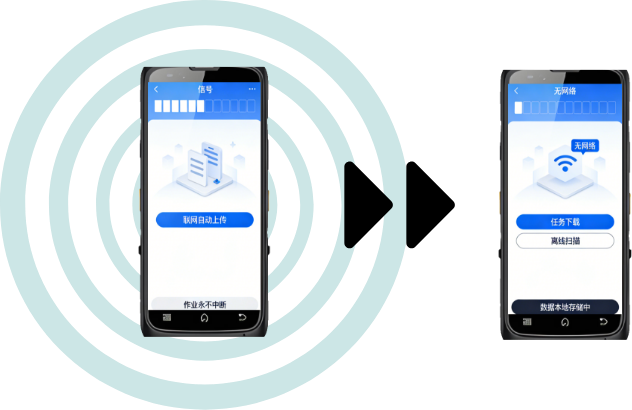
For basements or storage areas with weak signals, mission download and offline scanning, local storage of data, automatic uploading after connection, and never interruption.
 Multifunctional Integration
Collecting and receiving, reviewing the Treasury, transferring the Treasury, inventorying one and all pallet management operations on a single basis.

What This Means for Your Operations
Pallet Lifecycle Management
From the library to the end of the life, one-yard backtracking is controllable.
Establish a pallet electronic identity card to enable the detailed and detailed management of assets from procurement, day-to-day use, maintenance and repair to end-of-life close-door management.
Core strengths

Status full-range tracking
Real-time recording of data on the full dimensions of the time of entry, location of storage, carrying of goods, flow path etc. of the tray, resulting in a complete asset history.

Maintenance of registry and administration
Supports the one-click sweep to initiate a review that details maintenance time, replacement of spare parts, maintenance costs and those responsible for them, and provides a complete “one-to-one” medical record; the system leaves marks throughout the process, providing data support for assessing the health status of the tray, accounting for the cost of protection and re-use of decision-making.

Customised Rule Dismissal Determination
Internal flexible rule engines ... auto-match data based on the criteria set by the client (e.g. frequency, age or combination) ... trigger end of life early warning and achieve scientific decision-making to avoid overuse of risk or premature waste.
What This Means for Your Operations
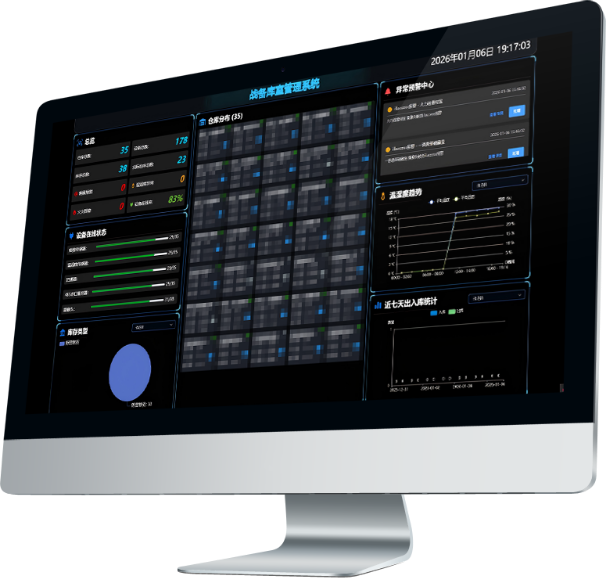
Visualized Inventory Screen
Tray location, quantity of goods, turn-off screen overview
The manager's cockpit, which translates the big tray data into a visual basis for decision-making and allows real-time monitoring of warehouse operations and active intervention.
Core strengths
Real-time inventory monitoring
The dynamic updating of pallet distribution heat in the various storage areas, the total quantity of real-time cargo and the number of empty trays, the simultaneous on-site changes at msire levels, provide a clear picture of the stock situation and eliminate data lag.
Operation progress monitoring
Real-time visualization of the task completion rate for access to the garage, efficiency of current operators and operational status of equipment, supporting the movement control command and resource redeployment by the manager.
An abnormal intelligence alert.
The system automatically monitors unusual situations such as inventory discrepancies, overtime detention and alerts the screen at short notice to change “post-in-the-fact” to “intervention in the event”, fast-tracking and resolving potential problems.
What This Means for Your Operations
Smart turnover warning
Unremarked, unallocated, inactive tray recognition to reduce asset losses
Passive management is proactive prevention, leaving idle assets and potential risks unscathed.
Core strengths
Automatic recognition of inactive assets
The system automatically analyses the... one-time operating time of the tray (entry and exit library or transfer), marks the tray that does not have any moving records beyond the established threshold (e.g. 30/60 days) and alerts managers to prioritize clean-up or redeployment, releasing valuable storage.
The old bank is over-pregnant.
Helps warehouses to follow the “first-in, first-out” principle and prevent long-term cargo backlogs from leading to obsolescence, deterioration or financial occupation.
AQIQUIP
In an inventory exercise, the system compares RFID scanning physical data with system book data in real time. Once a loss or gain is detected, the discrepancy details are displayed on the hand and management side, supporting rapid review and correction to ensure that the accounts are in real time.
Core values
Effectively activate sleeping stocks, reduce idle losses and significantly shorten the time taken to correct errors in inventory through prompt discrepancy tips to ensure that inventory data are accurate.
Full-scale adaptation of national production
Autonomous, controlled and perfectly compatible national production operating systems and databases
Responding to the national innovation strategy, a secure, autonomous and controlled pallet management system is being developed.
Locally appropriate advantages
National production operating system
Depth appropriate for thorium OS, UOS, operating in a stable flow and without compatibility barrier.




National production database
It is perfect to support mainstream national production databases such as DAM, Mansa and Southern Commons, ensuring that data are stored secure.



What This Means for Your Operations
Flexible integration and deployment
ERP/WMS, protection of established investment by enterprises
It's not an island of information, it's a powerful connector to the digital ecology of enterprises.
Core strengths

Provides a rich API interface, easy-to-connect with mainstream ERP and WMS systems such as SAP, Oracle, user pal, butterflies, etc., for data to be synchronized in two directions.

Supporting private, public and local deployments to meet the individual needs of different enterprises for data security and IT architecture.

The system is a micro-services architecture that allows for the start-up of functional modules as needed and flexible expansion as business developments occur.
What This Means for Your Operations
Cooperative docking services
From diagnosis to delivery, full-process customization safeguards
It is not just the sale of software, but also the provision of successful land-fall programmes.








3F, Building 1, 875 Qiuxing Road, Lin-gang Special Area, China (Shanghai) Pilot Free Trade Zone

Ms. Lei

Mr. Pang
Technology for short-term solutions - Reshaping Tray Management with RFID Technologies to "record and measure" every shipment
Batch-species recognition • Assets are visible throughout the life course · Soft and self-controlled & flexible deployment
The copyright of this program is owned by Shanghai-based Smart Technologies Ltd. and may not be forwarded/ embezzled without permission
 Ms. Lei
 Mr. Pang