


Smart labels for tyres/European standard
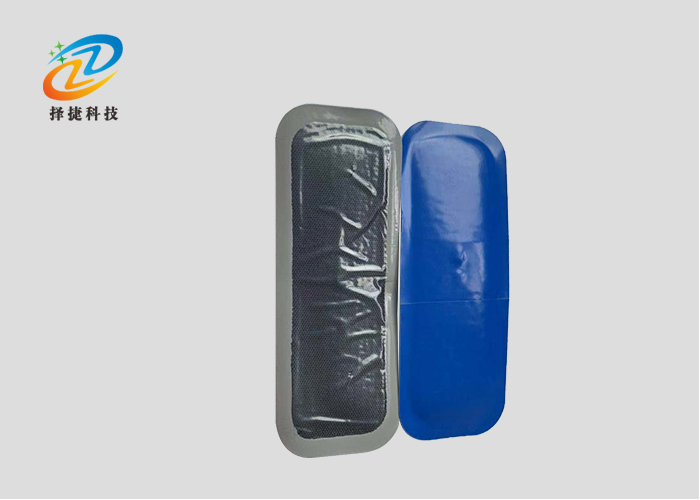
The smart label of tyres brings a new change to the car industry. On the tyre production line, each tyre is precisely embedded in a tyre's smart label, recording its production batch, materials, etc. The sales chain, the merchant-coded tyre smart tag, allows for quick product details and efficient management of inventory. Vehicles travel with the relevant equipment, the owner reads the smart label of tyres, masters the tire pressure, wears, etc., and ensures the safety of the vehicle.
Product Applications
The smart label/European marker for tyres is used for information-based management of various vehicle tyre management, tyre warehousing management and track record keeping.
Specifications
Chip protocol: EPC Class1 Gen2; ISO18000-6C
Working frequency: 865-868 MHz/902-928 MHz
Type of ImpinJ MOZN4QT or Aline Higgs-3
Memory: EPX128 bit, User512 bit, TID96 bit
Capability: readable to write
Use surface: rubber, tyre surface
Fixed Zreader Read distance: 600 cm-US, 210 cm-EU
Water-proofing level: IP67
Aqueous storage temperature: 25°C+100°C
Working temperature: 20°C+90°C
Size of the product: 95*35*3mm
Slurpium materials: professional rubber + springs
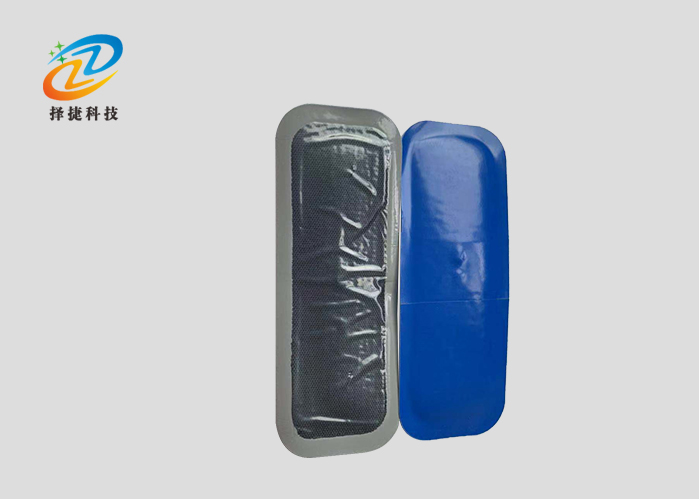
Colours: Black, Blue
Installation process: glue
Weight per person: 6.4 g/pcs
Additional Specifications
| Tag Dimensions | 95*35*3mm |
|---|---|
| Tag Material | Specialized rubber + spring |
| Memory Capacity | EPC 128bits |
| Operating Frequency | 902-928MHz |
| Communication Protocol | ISO18000-6C |
| Chip Type | N4QTor Aline Higgs-3 |
| Applications | It's for all kinds of wheels... |
Installation Method
◆ Place: Install the side of the tyre, not exceeding 7.62 cm from the end of the ring. Use a tyre cleaner to clean up the installation area and make sure that the surface is clean.
Label positioning and preparation: Matching RFID tire labels with tyres, marking an area half the size of the actual label as a position for installation processing. This step ensures that there is sufficient space for the label to be accurately installed.
Pumping: The introduction of a special grinding tool (recommended to use low rotation) to ensure safety, while the use of coarse graft to grind label positions until there is a slight flavour on the outside surface of the tyre. This helps to increase the adhesive investment.
Cleaning of the grinding area: After the grinding has been completed, the area is carefully cleaned to ensure that there are no residues that affect the adhesive effects of glue.
◆ Plug glue and install labels: Use tyre-specific glue (sulfide) to evenly cover the position. Take care to unplug the blue wrapping paper on the back of the label, and not touch the grey glue. Press the label to its position so that it is released to achieve a good paste effect.
Product Photos
Applications
Stock count
Challenge:Manual inventory counts are time-consuming, error-prone and inventory data cannot be synchronized in real time
Solution:Tyre smart labels support the rapid identification of lots and real-time inventory updates with reading and writing devices
Counter-false retroactive sources
Challenge:It's easy to copy the traditional anti-forgery methods by slamming the market with fake and hypocritical products.
Solution:Use the only code of a tyre's smart label to achieve one size, a chain-wide security from perjury.
Store stock.
Challenge:SKU is numerous, manual inventory has to be closed and stockings are missing alongside backlogs.
Solution:Cellular smart labels are free of batch reading, door-to-door inventory is completed quickly and stockings are available for timely warning.
Product advantages
6m
Distance to Read
Fixed-reader reading distance of up to 6 metres, fast count
100%
One size.
Each tyre is individually coded, traceable from the plant to the end of the life.
100,000 cycles
It's a long-term, reliable one.
Chip endurance: 100,000 read/write cycles; data retention: 10 years
90℃
It's hot.
Working temperature 20°C ~ + 90°C, adapted to tyre conditions
 Ms. Lei
 Mr. Pang