


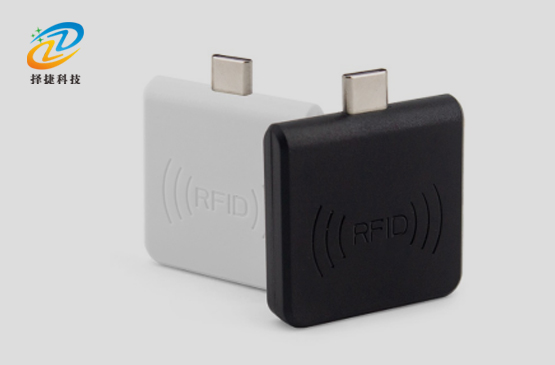
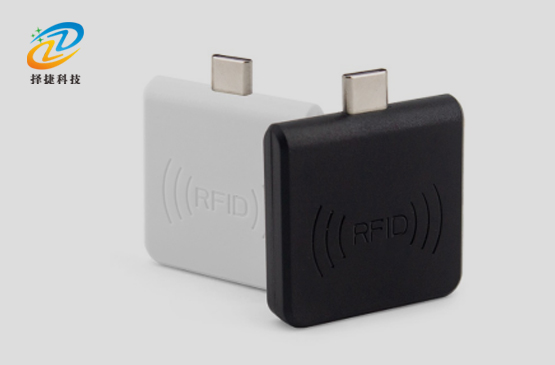
Hyperhigh frequency Android mobile phone/platform Type-c portable card reader ZJ901
Model: ZJ901
Product Overview
Specifications
• Working frequency band: 902 MHz ~ 928 MHz
• Read card type: ISO 18000-6C protocol label
• Work voltage: 5V
• Reading card distance: 0-5 cm
◆ Read card speed: 0.2s
• Outer size: 35 mm x 35 mm x 7 mm (excluding interfaces); 71 mm x 71 mm x 19 mm (packaging)
• Communications interface: Type-c
• Working temperature: 20°C ~ 70°C
• Working electricity: 100 mA
• Read the card at: <100 ms
• Reading card spacing: 0.5S
• Weight: 20g (net weight); 50g (packaging)
◆ Operating systems: Android (tested brands: Samsung, Sony, vivo, and Xiaomi); Windows XP, Windows CE, Windows 7, Windows 10, Linux, Windows Vista, and Android.
• Status indicator lamps: 2 colour LED (“Blue” power source LED, “Green” status sign)
Additional Specifications
| Working voltage | 5V |
|---|---|
| Operating Frequency | 902MHz~928MHz |
| Operating Temperature | -20℃~70℃ |
| Read card speed | 0.2s |
| Read card distance | 0~5cm |
| Read card spacing | 0.5S |
| Applications | Logistics and storage management, smart parking management, production pipelines... |
Use of methods and attention
Usage/installation methods
• After inserting a card reader into the Android system platform such as a mobile phone/platform, the card readers indicator is "Blue" to indicate that the card reader has reached the status of waiting card.
◆ Test method: Opens the output software for Android platforms such as mobile phones/platforms (e. g. memos/text editors), draws labels close to card readers, i.e. automatically displays an epc card at cursor and takes back the car function (as in the above figure).
Attention
Androids and so on: ODG.
• If the card reader is too far away, it can cause instability or failure and avoid reading cards at a critical point (the distance from which he can read them).
• The distance of the read card is more affected by different antenna designs, surrounding environments (mainly metal) and different cards, for example, as a result of different protocols.
• Read cards, which are recommended to be automatically close to the reader and quickly crossed from side by side of the card is not desirable and does not guarantee success in swiping cards.
• Unreactive swipe cards: whether the interface is plugged in; whether the radio frequency card is a tag for the corresponding protocol; whether the radio frequency card is broken; and whether there are additional radio frequency cards within the read card.
Product Presentation
 Ms. Lei
 Mr. Pang