


ZJTD02 RFID Conveyor Tunnel Reader
Model: ZJTD02
Product Overview
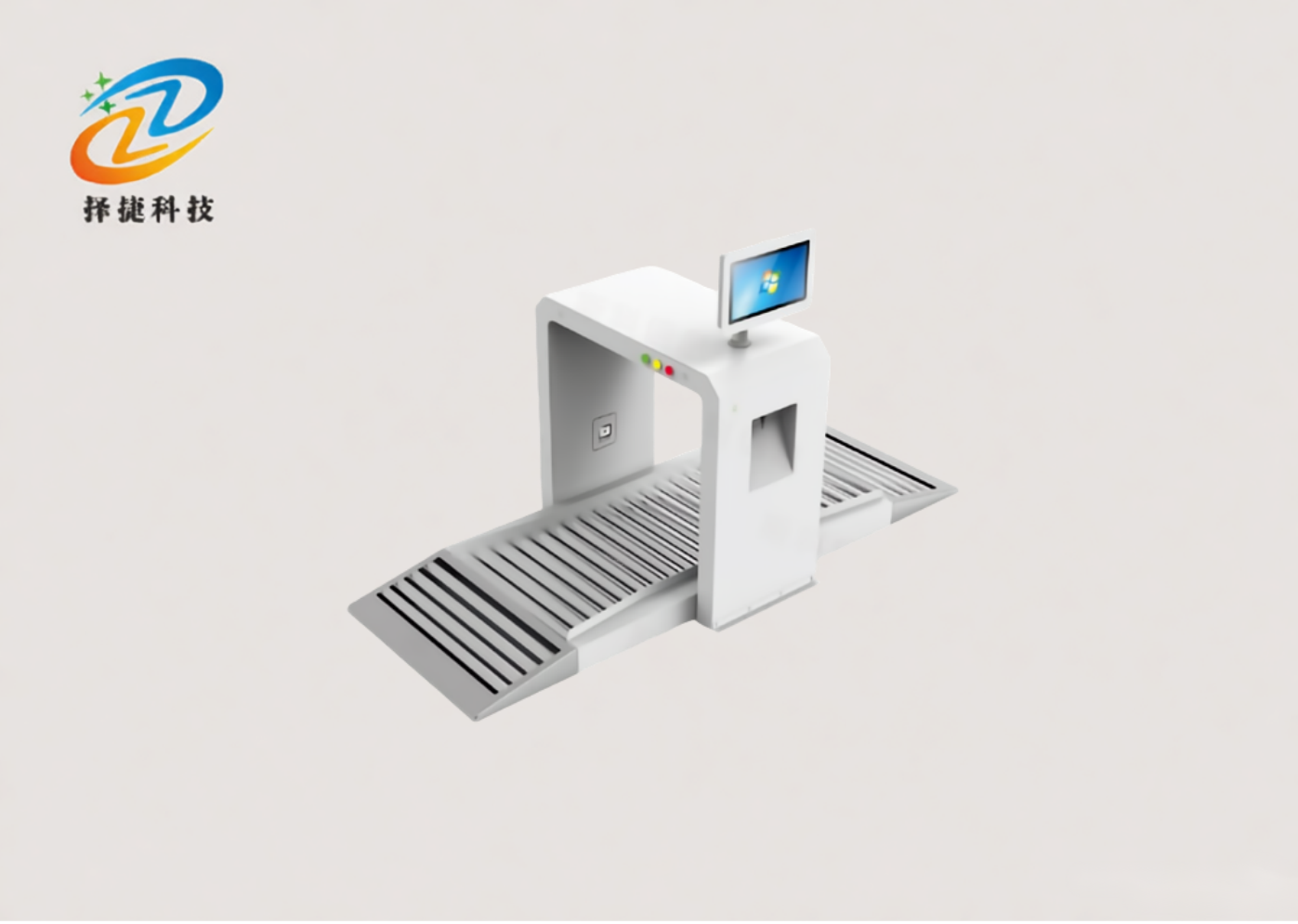
The ZJTD02 RFID conveyor combines radio-frequency identification with a conveyor tunnel for inventory counts and verification. It rapidly identifies multiple items in a single carton during batch processing, eliminating the need for traditional manual counting. The unit integrates multiple sensors and uses PLC control logic to automate identification. It can identify more than 300 items within 3 seconds, display a real-time list, cross-check the results, and provide alerts and alarms to help operators verify the count. This substantially reduces labor and saves time.
Working environment conditions
ZJTD02 RFID is a product that should work on dry, rigid and flat floors in the interior, requiring good ventilation and heat-dispersion conditions.
• Working temperature: 0°C ~ 50°C
• Storage temperature: -10°C ~60°C
• Environmental humidity: 10% RH ~ 90% RH
◆ The environmental and energy implications: Any radio launch equipment, including this one, may interfere with the work of medical equipment that is not properly protected. If there are problems in this regard, you can consult the manufacturer of the relevant medical equipment.
Specifications
• Working frequency band: 920-925 MHz (national standard)/902-928 MHz (concentrated price)
• Work standards: ISO 18000-6C/EPC C1G2, ISO 18000-6B, GB/T29768-2013 (extensible support)
• Output power: 33dbm/36dbm
• Transmission speed: 40 m/min
◆ Transfer weight: 80 KG
• Number of read labels: over 400 per one time
◆ Touch screen: 10.1 inches
• Operating system: windows/Android
• Electricity: Delta PLC with closed loop-to-peer
◆ Conveyor: Three independently controlled sections with adjustable speed.
Additional Specifications
| Operating Temperature | 0℃~50℃ |
|---|---|
| Storage temperature | -10℃~60℃ |
| Environmental humidity | 10%RH~90%RH |
| Output Power | 33dbm/36dbm |
| Transfer speed | Up to 40 m/min. |
| Transfer the load. | Up to 80 KG. |
| Working bands | 920-925 MHz (national standard) |
Ⅲ Main characteristics
◆ Support for the ISO18000-6C Aerial Interface Protocol (AAAT) standards, which are internationally common;
• Integrated design to reduce redundancy of equipment;
• Have an EPC tag matching and re-label filtering;
• Intensive reading patterns;
• Windows 10 operating system;
• The ability to work independently of the network;
• Support for software and hardware upgrades.
Overall structure
The ZJTD02 RFID transmitter consists of antennas, reading and writing modules, power-supply modules, work-control mainframes, touch screens, case casings and other selected accessories.
Configuration List
◆ Serial number 1: RFID transmitter - Platform - 1 - Plot - Main shell. Contains an internal moving body.
◆ Serial number 2: UHF RFID component - Set - 1 - Coding - Antenna, reader
◆ Serial number 3: Handheld - Set - 1 - Coding - Win10, 2G running +32G memory, with the option of anzor.
◆ Serial Number 4: Display screen - Set - 1 - Stamp - 10.1 inch electric-capable touch screen
Preparation and inspection before use
• The equipment needs to be prepared and inspected before it is used:
• The equipment is functioning normally;
• Whether antenna reading performance is satisfactory;
• The system parameter configuration is functional.
Software application environment
• Windows 10 system, installation. NET Framework 4.5.2
Daily maintenance
• Scanning of the outer casing: in a state of shutdown, the touch screen is cleaned with liquid crystal-screen cleaner or soft and clean fabric (e.g. glasses), while other parts are wiped with clean cloth;
• The total power supply of the equipment should be shut down and dust items should be covered on the equipment for long periods of time;
• Before the use is resumed after a long period of decommissioning, the container detection equipment will be opened and the connection determined before the total power source becomes operational.
◆ To be kept in a cool and dry environment.
Common trouble analysis and resolution
• Power system failure: check whether the power lines of the equipment are well connected or not damaged; whether the control switches on the power plugs are open, whether the mainframe switches are open and whether the power lights for each device are normal.
◆ Can not read label information: Checks whether the antennas are loose or, if so, the loose parts are tightened. Test with "demo software" to determine if the antenna is wrong.
VI Product Presentation
 Ms. Lei
 Mr. Pang